Agenda
Feb 3
2026
9AM-12:10PM PDT
2026
9AM-12:10PM PDT
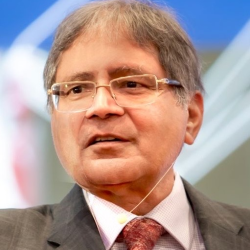 Panelist: Parveen Jain
 Panelist: Christopher Jain Miller
 Venu Mehta
9:05 am - 9:25 am
“Exploring Forgiveness Through Jain and Christian Prayer and Liturgical Practices”
20 mins
 Panelist: Chaitanya Rajamani
This research explores the conceptual frameworks and liturgical practices of forgiveness in Jainism and Christianity, two religious traditions with distinct theological foundations yet similar emphasis on forgiveness as a spiritual virtue. Through textual analysis, ethnographic observation, and comparative theological methodology, this study examines how forgiveness operates within prayer practices, ritual observances, and communal worship in both traditions. The research reveals that while Jain forgiveness (kṣamā) is embedded within a non-theistic, karma-based framework emphasizing interior purification and universal reconciliation, Christian forgiveness operates within a theistic framework where divine-human forgiveness is paradigmatic for interpersonal reconciliation. Despite these fundamental differences, both traditions demonstrate remarkable convergence in utilizing liturgical practices to embody and transmit forgiveness as a transformative spiritual practice.
Read MoreRead Less9:25 am - 9:45 am
“Concomitance Between Crimes Against Animals and Social Deviance”
20 mins
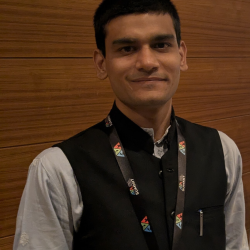 Panelist: Ayaan Ali Siddiqui
Animal cruelty has long been framed as a matter of morality or, at best, as a minor statutory concern. Yet, when studied closely, it emerges not as an isolated offence but as part of a broader continuum of violence. Criminological theories such as the Violence Graduation Hypothesis suggest that acts of cruelty toward animals may function as early markers of violent escalation, while the Deviance Generalisation Hypothesis places animal abuse within the larger repertoire of antisocial behaviour. These resonate with psychological insights from Bandura’s Social Learning Theory, which emphasizes how violence is observed, imitated, and normalized, and with ecological criminology, such as Shaw and McKay’s Social Disorganisation Theory, which ties deviance to the erosion of communal and structural bonds.
In India, the urgency of this debate is compounded by a persistent blind spot in criminal records. While the Prevention of Cruelty to Animals Act, 1960 and state-specific statutes provide a legal framework, the National Crime Records Bureau does not record animal cruelty cases. This absence of systematic data has the effect of rendering such violence invisible at the national level, undermining both early-warning systems and crime prevention strategies. The scattered instances that do surface mainly through media reporting, NGO documentation, or court interventions suggest something more structural than incidental.
This research proposes that animal cruelty should be understood not as marginal misconduct but as an integral part of India’s criminological field. It treats cruelty as a signal of deeper social, psychological, and institutional patterns: a phenomenon that can illuminate how violence circulates between humans and nonhuman animals, between household and street, and between symbolic law and procedural enforcement.
Read MoreRead LessIn India, the urgency of this debate is compounded by a persistent blind spot in criminal records. While the Prevention of Cruelty to Animals Act, 1960 and state-specific statutes provide a legal framework, the National Crime Records Bureau does not record animal cruelty cases. This absence of systematic data has the effect of rendering such violence invisible at the national level, undermining both early-warning systems and crime prevention strategies. The scattered instances that do surface mainly through media reporting, NGO documentation, or court interventions suggest something more structural than incidental.
This research proposes that animal cruelty should be understood not as marginal misconduct but as an integral part of India’s criminological field. It treats cruelty as a signal of deeper social, psychological, and institutional patterns: a phenomenon that can illuminate how violence circulates between humans and nonhuman animals, between household and street, and between symbolic law and procedural enforcement.
 Cogen Bohanec
10:05 am - 10:25 am
"Alluri Sitarama Raju and Yoga Under Colonial Violence"
20 mins
 Panelist: Saathvik Devarakonda
This paper examines Alluri Sitarama Raju's identity as a warrior-yogi and its systematic erasure from yoga discourse, revealing continuities in necropolitical violence against Adivasi communities from colonial forest dispossession to contemporary displacement in Andhra Pradesh and Telangana. Through historical analysis and contemporary documentation, the study demonstrates how Alluri's yogic practice served anti-colonial resistance and how his double elimination – physical execution and epistemic erasure – reflects patterns of violence that persist today through dam projects, counterinsurgency operations, and Forest Rights Act violations. The analysis challenges modern yoga's depoliticization while illuminating structural continuities in state violence against Indigenous communities.
Read MoreRead Less10:25 am - 10:45 am
“Modern Yogic and Meditative Practices Taught by Gurudev Shree Chitrabhanu Ji”
20 mins
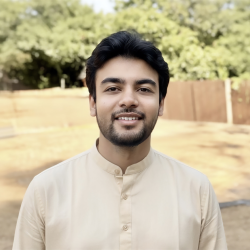 Panelist: Sohum Shah
This paper explores the modern yoga and meditation teachings of Gurudev Shree Chitrabhanu Ji, a prominent Jain leader who synthesized traditional Jain principles with contemporary spiritual needs. While instrumental in popularizing Jain meditation in the West, his specific philosophy remains largely unexamined in academia. Drawing on an analysis of his primary texts, discourses, and recorded sermons, alongside secondary academic sources and original interviews, this research identifies and analyses the key practices Gurudev Shree advocated.
The findings demonstrate that his unique system prioritizes experiential self-realization and inner peace over ritualism, aiming to help practitioners conquer "inner enemies" like anger and ego. Key methodologies he taught include the three-step (Tripadī) inquiry (kohum, nahum, sohum), a modernized, positive application of the twelve reflections (bhāvanās), specific mantra meditations (e.g., ṇamo arihantāṇaṃ and vīruṃ), and the integration of meditation on the seven energy centres.
Gurudev Shree's work marks a significant contribution to the evolution of modern Jain yoga. By reinterpreting ancient practices for a global audience, he shifted the emphasis from traditional ritual to accessible, psychologically-informed self-inquiry, offering a universal path toward inner transformation.
Read MoreRead LessThe findings demonstrate that his unique system prioritizes experiential self-realization and inner peace over ritualism, aiming to help practitioners conquer "inner enemies" like anger and ego. Key methodologies he taught include the three-step (Tripadī) inquiry (kohum, nahum, sohum), a modernized, positive application of the twelve reflections (bhāvanās), specific mantra meditations (e.g., ṇamo arihantāṇaṃ and vīruṃ), and the integration of meditation on the seven energy centres.
Gurudev Shree's work marks a significant contribution to the evolution of modern Jain yoga. By reinterpreting ancient practices for a global audience, he shifted the emphasis from traditional ritual to accessible, psychologically-informed self-inquiry, offering a universal path toward inner transformation.
 Jonathan Dickstein
11:05 am - 11:25 am
"Ahimsa or Exclusion? Palitana's 2014 Vegetarian Mandate"
20 mins
 Panelist: James Taylor
In 2014, Palitana, a sacred Jain city in Gujarat, India, became the world's first fully vegetarian city by law, banning meat, eggs, and slaughter, driven by Jain monks' hunger strikes enforcing ahimsa (non-violence). This followed the Jain community's recognition as a legal minority in January, securing protections for their temples and institutions, and the Bharatiya Janata Party's(BJP) electoral victory in May, amplifying Hindu nationalist agendas aligned with Jain values. The ban, rooted in the sanctity of Mount Shatrunjaya—Jainism's holiest pilgrimage site, home to nearly 900 temples—reflected centuries of religious and political dynamics in Gujarat. However, it sparked controversy, particularly among Palitana's Muslim and Dalit communities, who viewed it as exclusionary, threatening their livelihoods and dietary freedoms. Historically, Jains navigated complex relations with Muslim rulers in Gujarat, facing temple destruction in the 13th-14th centuries while leveraging economic influence as traders and bankers. The 2014 vegetarian mandate, spearheaded by Jain leader Acharya Virag Sagar Maharaj, expanded a 1999 vegetarian zone, culminating in a city-wide ban after intense pressure from fasting monks. While Jains celebrated it as a triumph of ahimsa, the ban disrupted approximately 260 butcher shops, predominantly Muslim-owned, prompting legal challenges and accusations of government overreach. Critics, including Muslim leaders and fishermen, argued it violated their rights, while the BJP's Hindu nationalist policies, under Narendra Modi, were seen as exploiting cultural divides to marginalize minorities. Despite its intent, the ban's exemption of dairy raises ethical concerns, as it may fuel an underground beef and leather trade, contradicting ahimsa. While boosting Jain tourism, the mandate highlights tensions between religious ideals and secular governance, offering lessons for global vegetarian movements on balancing cultural values with social equity.
Read MoreRead Less11:25 am - 11:45 am
“The Great Indian Kitchen & The Duluth Wheel: Feeding Work as a Site of Coercive Control”
20 mins
 Panelist: Agni Hogaboom
The 2021 Malayalam-language film The Great Indian Kitchen achieved widespread critical and popular acclaim for its unflinching depiction of domestic oppression disguised as wholesome familial tradition. The narrative follows a young dancer newly married into an upper-caste household, who gradually confronts the brutal expectations surrounding women’s domestic labor, sexuality, vocation, and personal autonomy. The film’s remarkable reception—culminating in nine major awards, including the Kerala State Film Awards for Best Film and Best Screenplay—led to two remakes: the Telugu The Great Indian Kitchen (2023) and the Hindi Mrs. (2024). Although all three share the same narrative framework, the remakes differ substantially in tone, aesthetic strategies, and political inflection.
This paper undertakes a comparative analysis of the three films, identifying points of narrative continuity and transformation, and evaluating how these differences recalibrate each film’s affective and ideological dimensions. Employing Evan Stark’s model of coercive control alongside the Duluth Model of domestic violence, I interpret the films’ portrayals of patriarchy not as isolated interpersonal conflict but as manifestations of systemic coercion embedded within familial and cultural structures. Particular attention is devoted to four recurrent motifs: domestic space, religiosity, the groom, and the father-in-law.
I argue that the Malayalam original and its Telugu remake sustain a rigorous feminist critique of patriarchal domination, whereas Mrs. depoliticizes this critique by recasting structural subjugation as an individualized emotional narrative. This shift dilutes the radical potential of the original, transforming systemic critique into a palatable domestic drama. Ultimately, I propose that coercive control frameworks offer a productive analytical lens for cinematic representations of gendered violence, highlighting how The Great Indian Kitchen and its adaptations illuminate ongoing negotiations around women’s agency, domesticity, and resistance in contemporary India and beyond.
Read MoreRead LessThis paper undertakes a comparative analysis of the three films, identifying points of narrative continuity and transformation, and evaluating how these differences recalibrate each film’s affective and ideological dimensions. Employing Evan Stark’s model of coercive control alongside the Duluth Model of domestic violence, I interpret the films’ portrayals of patriarchy not as isolated interpersonal conflict but as manifestations of systemic coercion embedded within familial and cultural structures. Particular attention is devoted to four recurrent motifs: domestic space, religiosity, the groom, and the father-in-law.
I argue that the Malayalam original and its Telugu remake sustain a rigorous feminist critique of patriarchal domination, whereas Mrs. depoliticizes this critique by recasting structural subjugation as an individualized emotional narrative. This shift dilutes the radical potential of the original, transforming systemic critique into a palatable domestic drama. Ultimately, I propose that coercive control frameworks offer a productive analytical lens for cinematic representations of gendered violence, highlighting how The Great Indian Kitchen and its adaptations illuminate ongoing negotiations around women’s agency, domesticity, and resistance in contemporary India and beyond.